The load-board carrier nobody checked
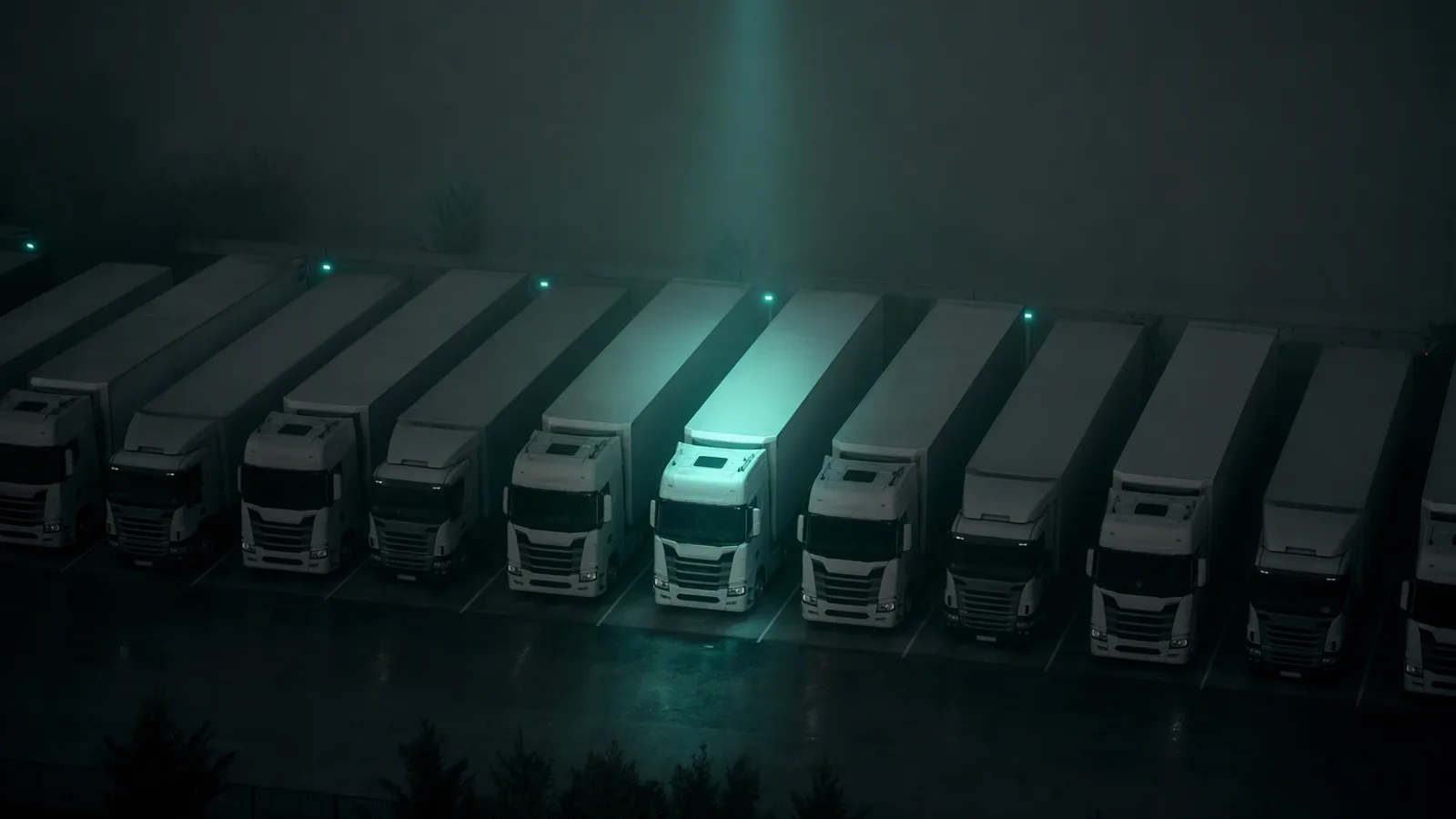
Half past four on a Thursday. A load for tomorrow morning has lost its carrier. The dispatcher posts it on a freight exchange, a reply comes in within minutes at a sensible rate, the company name looks familiar, and the order goes out. Everybody goes home relieved.
Usually that is exactly what it looks like: a carrier with a free truck. Sometimes it is somebody using a real company’s name with a different phone number, a carrier who will pass the load on to someone else, or a company that does not exist at all. Which one it was becomes clear with the load — or with its absence.
Why the check gets skipped
Time pressure. Checking happens when there is time, and the loads that urgently need a carrier are exactly the ones where there is none.
Familiarity. A name seen before on the exchange feels checked. It is not. What was seen was a name, not confirmation that the person writing now works there.
The exchange’s own verification. Freight exchanges have their own verification of the companies that register, and it is useful. It confirms the account — not the identity of whoever is using it today, and not whether the contact details in this conversation belong to that company.
It lives in one head. The experienced dispatcher knows what to look for. The new one, or the experienced one at half past four, does not always do it.
What to check every time
The company exists and is active. Name, address and tax number in the official company register of the country where it is based. An EU VAT number can be confirmed in the European Commission’s VIES service. For a Polish company, the VAT taxpayer register known as the white list (biała lista) also shows the bank accounts the company has declared.
It is entitled to carry. For international haulage within the EU, a Community licence issued to that company. The licence should name the same entity as the register.
It is insured for this load. A current carrier’s liability policy whose sum insured and scope cover these goods, their value and the countries on the route. A PDF can be edited; when the load is valuable, a call to the insurer settles it.
The contact matches the company. The email address and phone number in this conversation should be ones the company publishes, or ones you already have on file. Small carriers often use a free mailbox, and that proves nothing on its own; a free mailbox plus a phone number nobody can link to the company is a different matter. Confirm by calling a number found independently, not the one in the message.
The truck and the driver match the order. Registration plates and the driver’s name confirmed before loading and checked at the gate. A different vehicle at the dock is a reason to hold the loading, not to improvise.
Re-check when something changes
A carrier you have worked with for years is not a risk because they are new. They become one when something changes: a new email address, a new phone number, a request to pay into a different bank account. Each of those deserves the same check as a stranger, because each is exactly what somebody impersonating that carrier would need to change.
Why it belongs in the order
A checklist on the wall is a memory exercise, and memory is what fails at half past four. The check only works if the order carries it: the register entry, licence and policy attached to the carrier with the date they were checked and the name of whoever checked them — and the order held back until they are there.
That does not have to be slow. For a known carrier with nothing changed, it is a glance at a date. For a new one, it is the five minutes that should have been spent anyway. What changes is that skipping it becomes visible, as a decision somebody took and put their name to, rather than something that simply did not happen on a busy afternoon.
- subcontracting
- carrier vetting
- fraud
- freight exchange